FILLIPE COUTIÑO
This striking piece is defined by its immediate physicality: dark ground, high-contrast linear movement, and a charged palette of ochre, rust, cadmium yellow, white, burgundy, orange, blue, and black.
White architectural forms appear to contain the composition, while sweeping gestures push across the surface like currents, foliage, machinery, and the intimate rituals that Coutiño wears proudly in his Câmara de Ecos series. A dark field gives the brighter marks a sense of illumination, as if the image emerges from a nocturnal and turbulent space.
The piece is panoramic and restless. It feels worked, revised, inhabited.
The surface is active with thin washes, dry-brushed passages, opaque strokes, drips, scraped areas, and visible canvas weave. The sequence of arcs, ovals, ladder-like marks, crown-like white peaks and clustered circular forms suggest portals, masks, boats, teeth, plants, shields, or ceremonial objects, though none settle into literal description.
The blue passages at the edges cool the work and prevent the composition from becoming overly dense, and reveal a confident understanding of surface. The artist allows the canvas texture to participate in the image: no varnish has been applied, preserving the matte, chalky quality of the acrylic.
Coutiño is well-versed in the language of graffiti, in late modern gestural abstraction and outsider mark-making, but his work remains most successful when read as a personal visual system. The marks suggest a private grammar of signs and scars.
What distinguishes this canvas from much of the work currently circulating in the post-Basquiat idiom is its compositional discipline. The central mask, for all its expressive distortion, is rigorously balanced. The artist's style is genuinely his own: looser, wetter, and more rhythmic than its predecessors.
This painting has the scale and visual force expected of a statement work. In a contemporary interior, it would command a room, especially in a restrained architectural setting where its heat and density could fully register. It suits collectors interested in contemporary expressionist painting, particularly those building holdings around emerging Afro-Latin gestural figuration.
Materials | Acrylic and Spray on canvas
Size | 120 × 120 cm
Year | 2026
Series | Câmara de Ecos
Hand-signed by artist and dated
Unique work
Includes a Certificate of Authenticity
FILLIPE COUTIÑO
This striking piece is defined by its immediate physicality: dark ground, high-contrast linear movement, and a charged palette of ochre, rust, cadmium yellow, white, burgundy, orange, blue, and black.
White architectural forms appear to contain the composition, while sweeping gestures push across the surface like currents, foliage, machinery, and the intimate rituals that Coutiño wears proudly in his Câmara de Ecos series. A dark field gives the brighter marks a sense of illumination, as if the image emerges from a nocturnal and turbulent space.
The piece is panoramic and restless. It feels worked, revised, inhabited.
The surface is active with thin washes, dry-brushed passages, opaque strokes, drips, scraped areas, and visible canvas weave. The sequence of arcs, ovals, ladder-like marks, crown-like white peaks and clustered circular forms suggest portals, masks, boats, teeth, plants, shields, or ceremonial objects, though none settle into literal description.
The blue passages at the edges cool the work and prevent the composition from becoming overly dense, and reveal a confident understanding of surface. The artist allows the canvas texture to participate in the image: no varnish has been applied, preserving the matte, chalky quality of the acrylic.
Coutiño is well-versed in the language of graffiti, in late modern gestural abstraction and outsider mark-making, but his work remains most successful when read as a personal visual system. The marks suggest a private grammar of signs and scars.
What distinguishes this canvas from much of the work currently circulating in the post-Basquiat idiom is its compositional discipline. The central mask, for all its expressive distortion, is rigorously balanced. The artist's style is genuinely his own: looser, wetter, and more rhythmic than its predecessors.
This painting has the scale and visual force expected of a statement work. In a contemporary interior, it would command a room, especially in a restrained architectural setting where its heat and density could fully register. It suits collectors interested in contemporary expressionist painting, particularly those building holdings around emerging Afro-Latin gestural figuration.
Materials | Acrylic and Spray on canvas
Size | 120 × 120 cm
Year | 2026
Series | Câmara de Ecos
Hand-signed by artist and dated
Unique work
Includes a Certificate of Authenticity


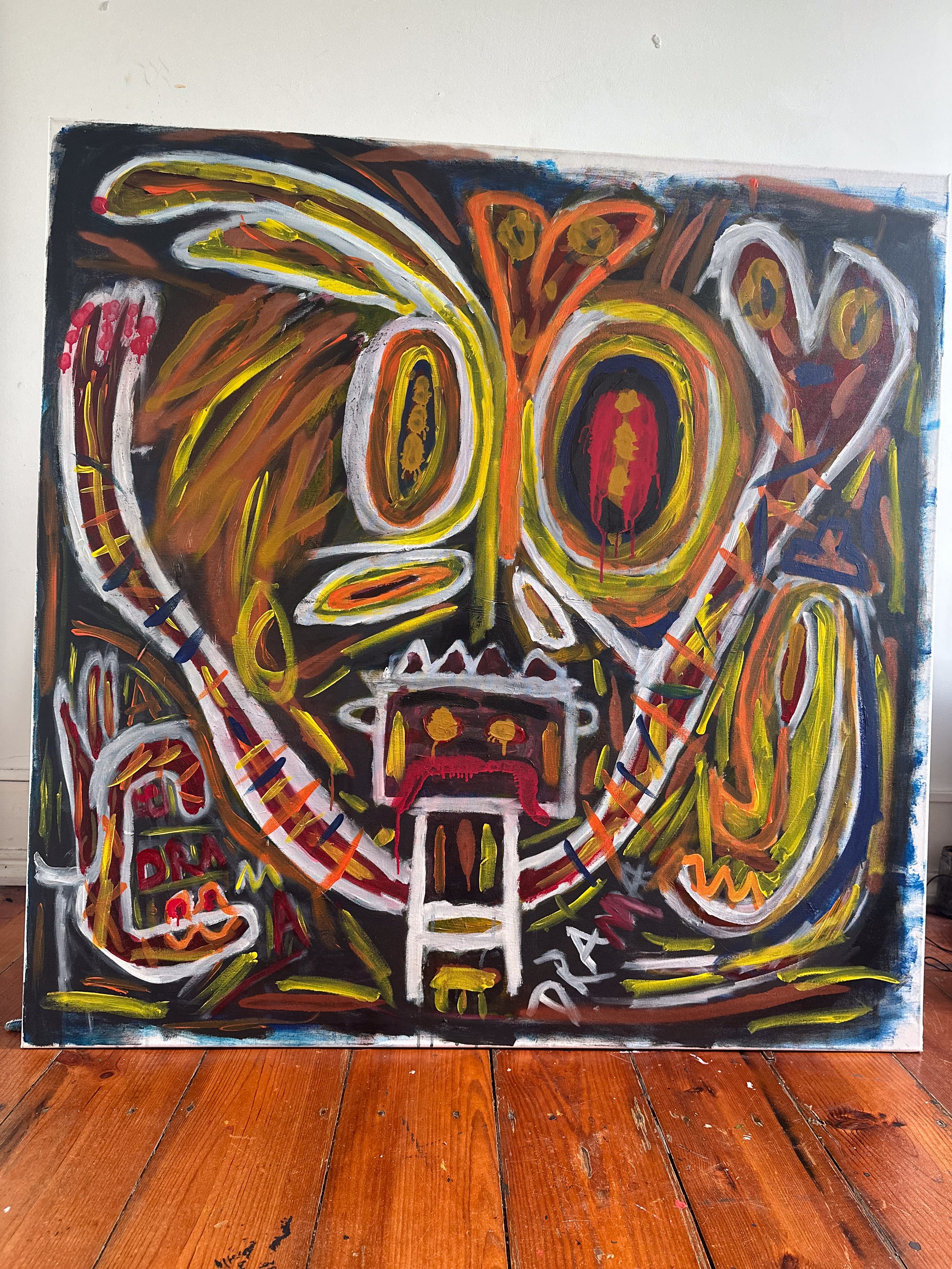 Image 1 of 6
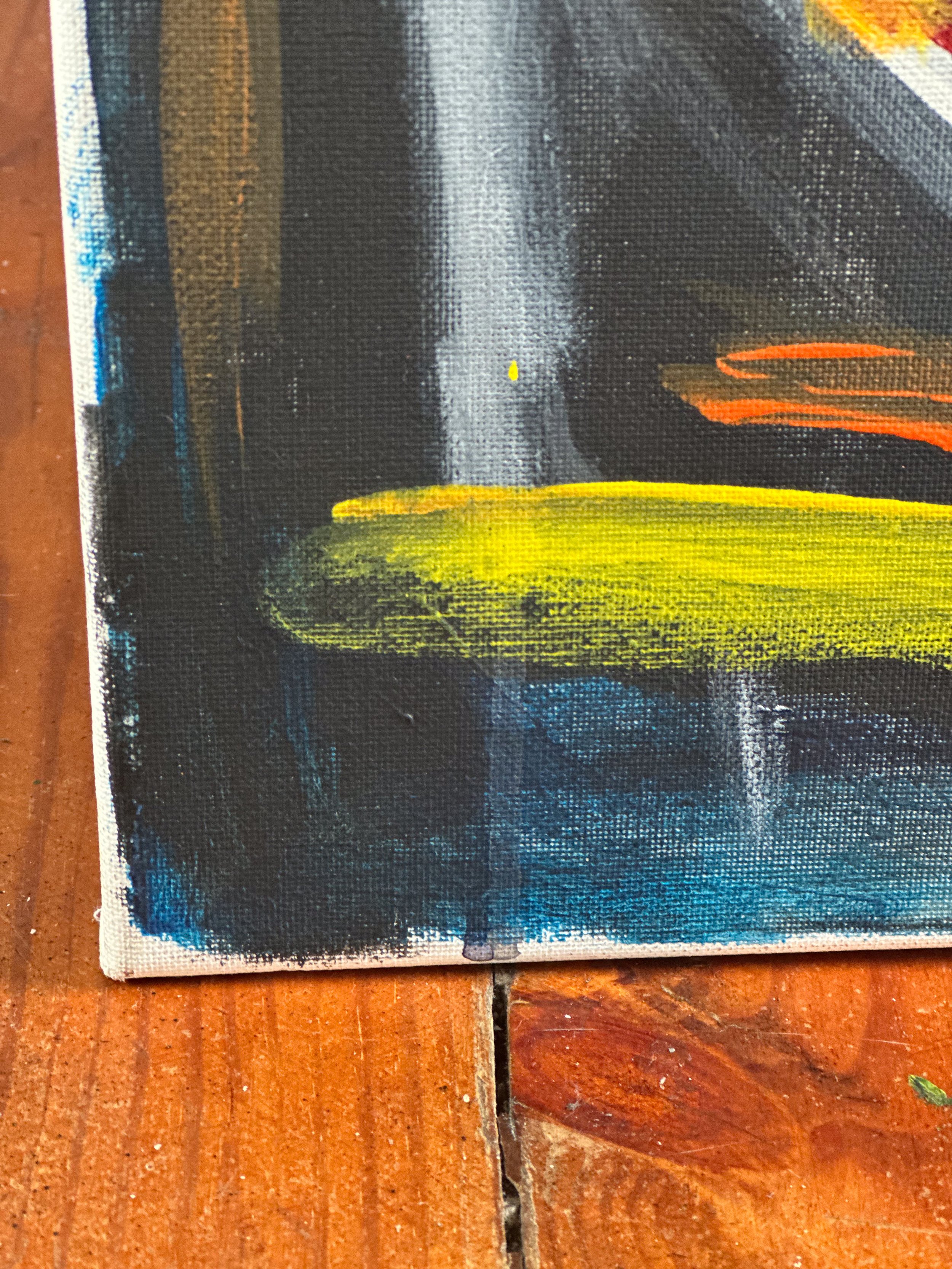 Image 2 of 6
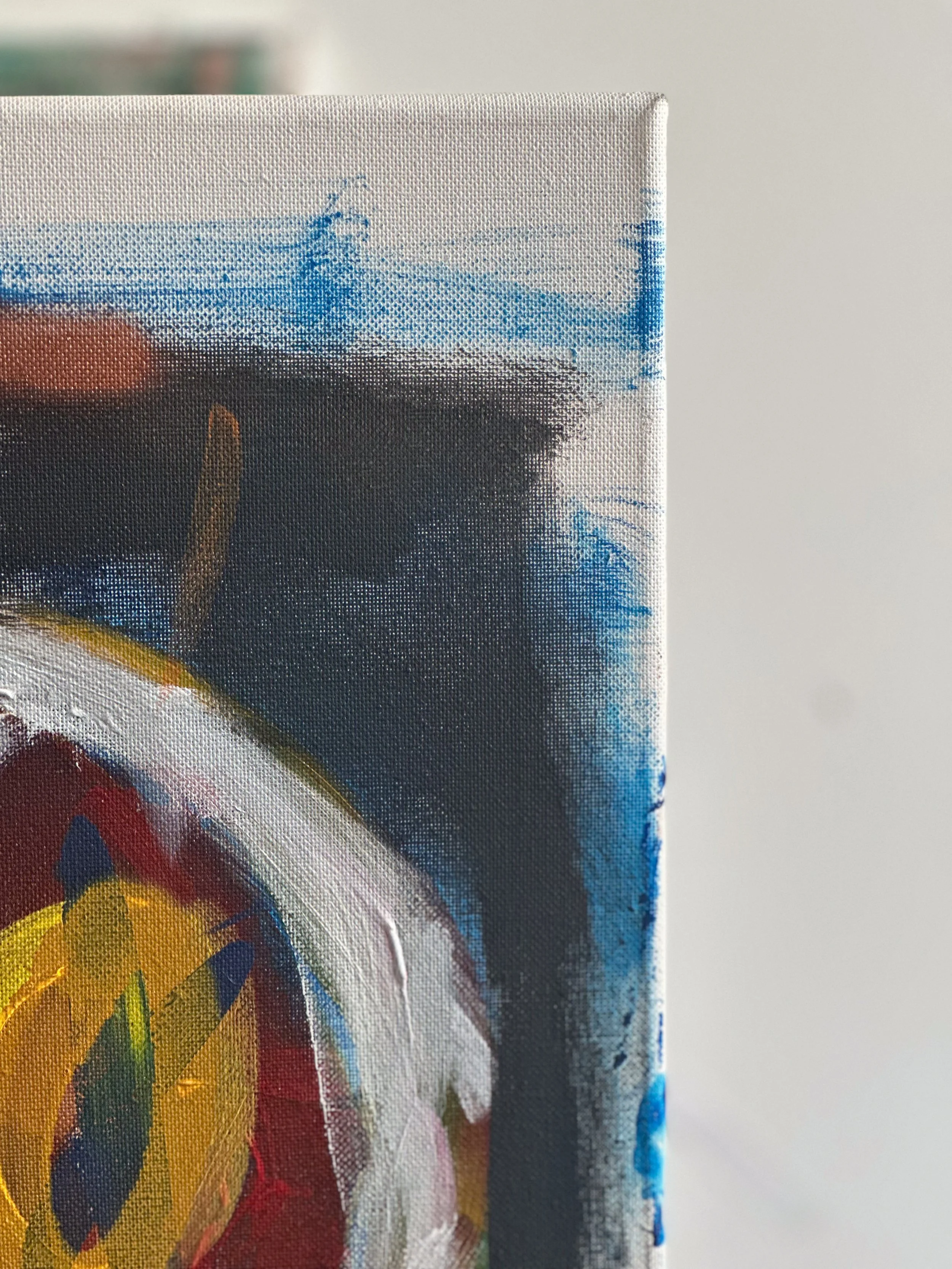 Image 3 of 6
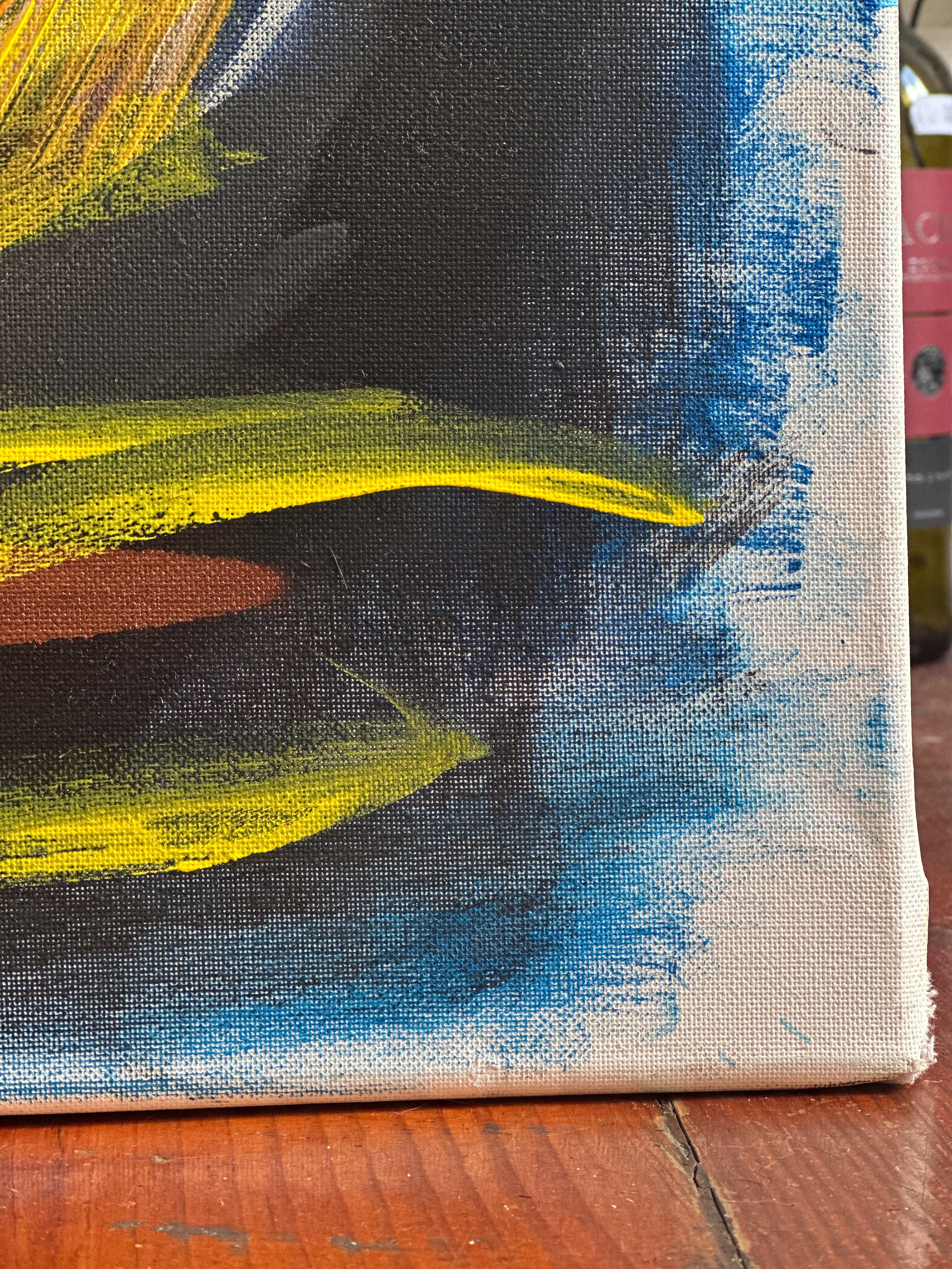 Image 4 of 6
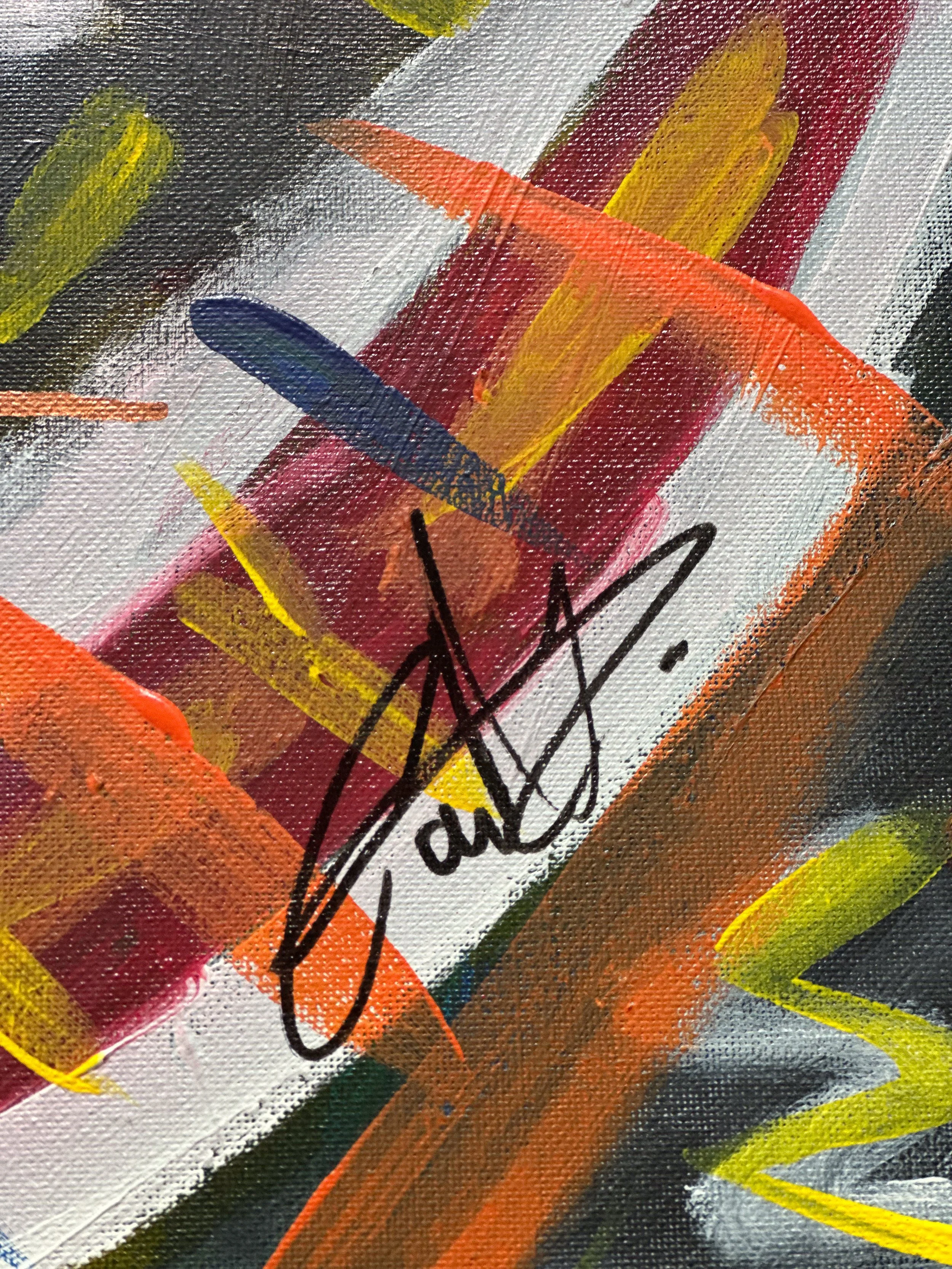 Image 5 of 6
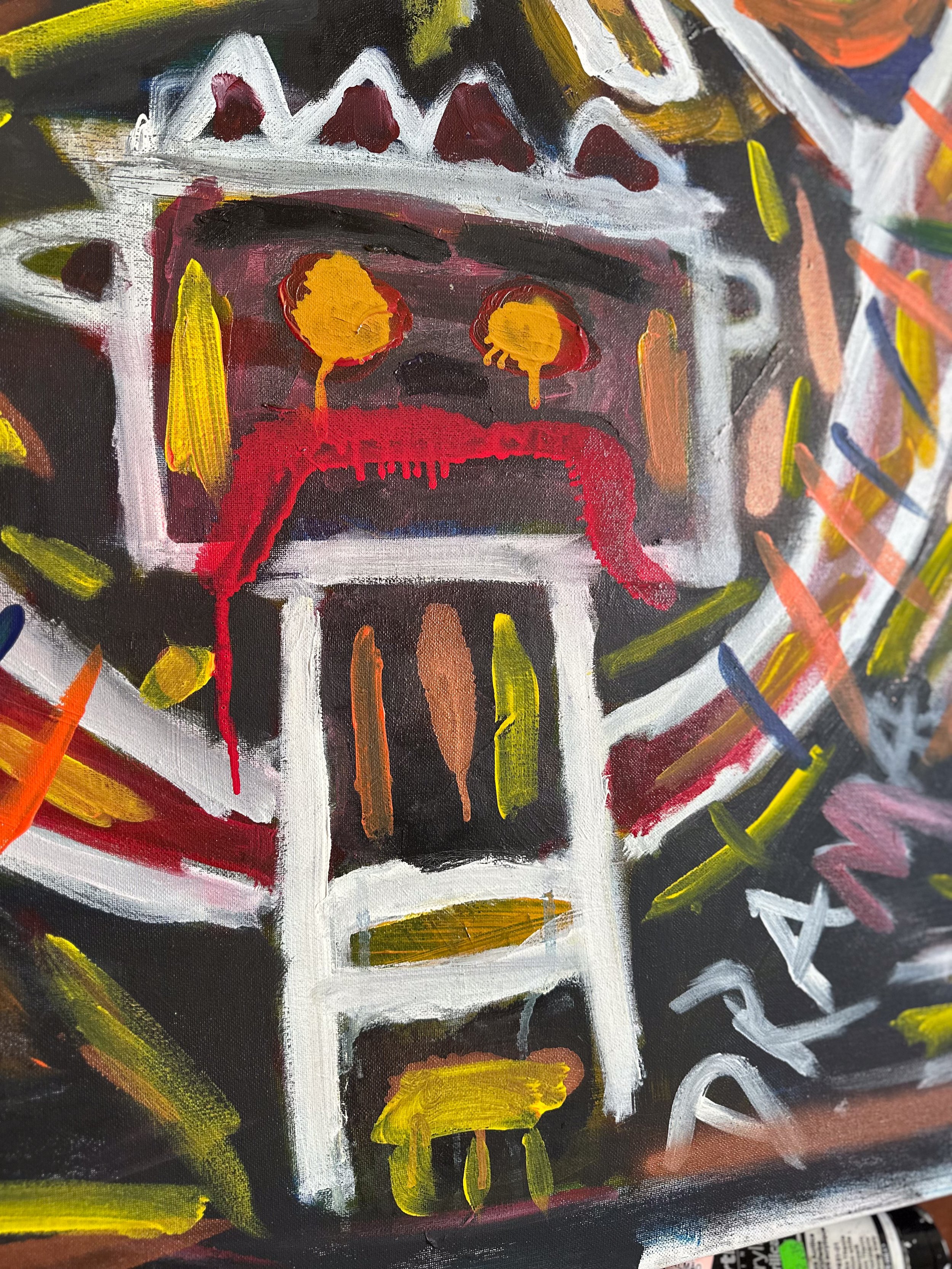 Image 6 of 6