GUSTAVO LOPES PEREIRA
In this haunting work, Lopes Pereira photographs an elderly woman holding a framed panoramic image of the waterfront of Lourenço Marques, the former colonial name of Maputo, Mozambique.
The sitter is shown from the neck down, with her face absent, but the portrait is not anonymous. Identity is carried through posture, hands, clothing, jewelry, and the object she presents to the camera.
The composition is direct and frontal, while built on a deliberate refusal of the conventional anchor of portraiture. The weight of identification falls onto what remains: two simultaneous images separated by roughly half a century and the length of a continent. The older one is a public, commercial view of a city that no longer exists; the newer one is a private interior in Portugal in which that view still hangs on, literally held.
The temporal layering is at the heart of the matter: a 1960s souvenir kept in working order by the hands that brought it across the sea in 1975.
In Ultramar, the series to which this work belongs, what a household chooses to frame, dust, and display constitutes an irreplicable record, multiplied across an entire generation. It becomes a distributed archive of Portugal's traumatic withdrawal from Africa, an intimate politics that the larger society has been slow to assemble, and slower to interpret.
Lourenço Marques does not mourn a lost empire and does not absolve it. With unusual restraint, it documents how a colonial geography continues to be carried in the ordinary gestures of an ageing body, and how a country's unfinished history can be found, framed, in someone's living room.
Materials: Radiant White cotton paper, Inkjet photography print, Black lacquered frame with housing, 5mm PVC and standard glass.
Size: 60 x 42,86 cm
Framed Size: 62,5 x 45,5 cm
Year: 2021
Series: Ultramar
Hand-signed by artist and dated in pencil.
Unique edition
Includes a Certificate of Authenticity
GUSTAVO LOPES PEREIRA
In this haunting work, Lopes Pereira photographs an elderly woman holding a framed panoramic image of the waterfront of Lourenço Marques, the former colonial name of Maputo, Mozambique.
The sitter is shown from the neck down, with her face absent, but the portrait is not anonymous. Identity is carried through posture, hands, clothing, jewelry, and the object she presents to the camera.
The composition is direct and frontal, while built on a deliberate refusal of the conventional anchor of portraiture. The weight of identification falls onto what remains: two simultaneous images separated by roughly half a century and the length of a continent. The older one is a public, commercial view of a city that no longer exists; the newer one is a private interior in Portugal in which that view still hangs on, literally held.
The temporal layering is at the heart of the matter: a 1960s souvenir kept in working order by the hands that brought it across the sea in 1975.
In Ultramar, the series to which this work belongs, what a household chooses to frame, dust, and display constitutes an irreplicable record, multiplied across an entire generation. It becomes a distributed archive of Portugal's traumatic withdrawal from Africa, an intimate politics that the larger society has been slow to assemble, and slower to interpret.
Lourenço Marques does not mourn a lost empire and does not absolve it. With unusual restraint, it documents how a colonial geography continues to be carried in the ordinary gestures of an ageing body, and how a country's unfinished history can be found, framed, in someone's living room.
Materials: Radiant White cotton paper, Inkjet photography print, Black lacquered frame with housing, 5mm PVC and standard glass.
Size: 60 x 42,86 cm
Framed Size: 62,5 x 45,5 cm
Year: 2021
Series: Ultramar
Hand-signed by artist and dated in pencil.
Unique edition
Includes a Certificate of Authenticity


 Image 1 of 4
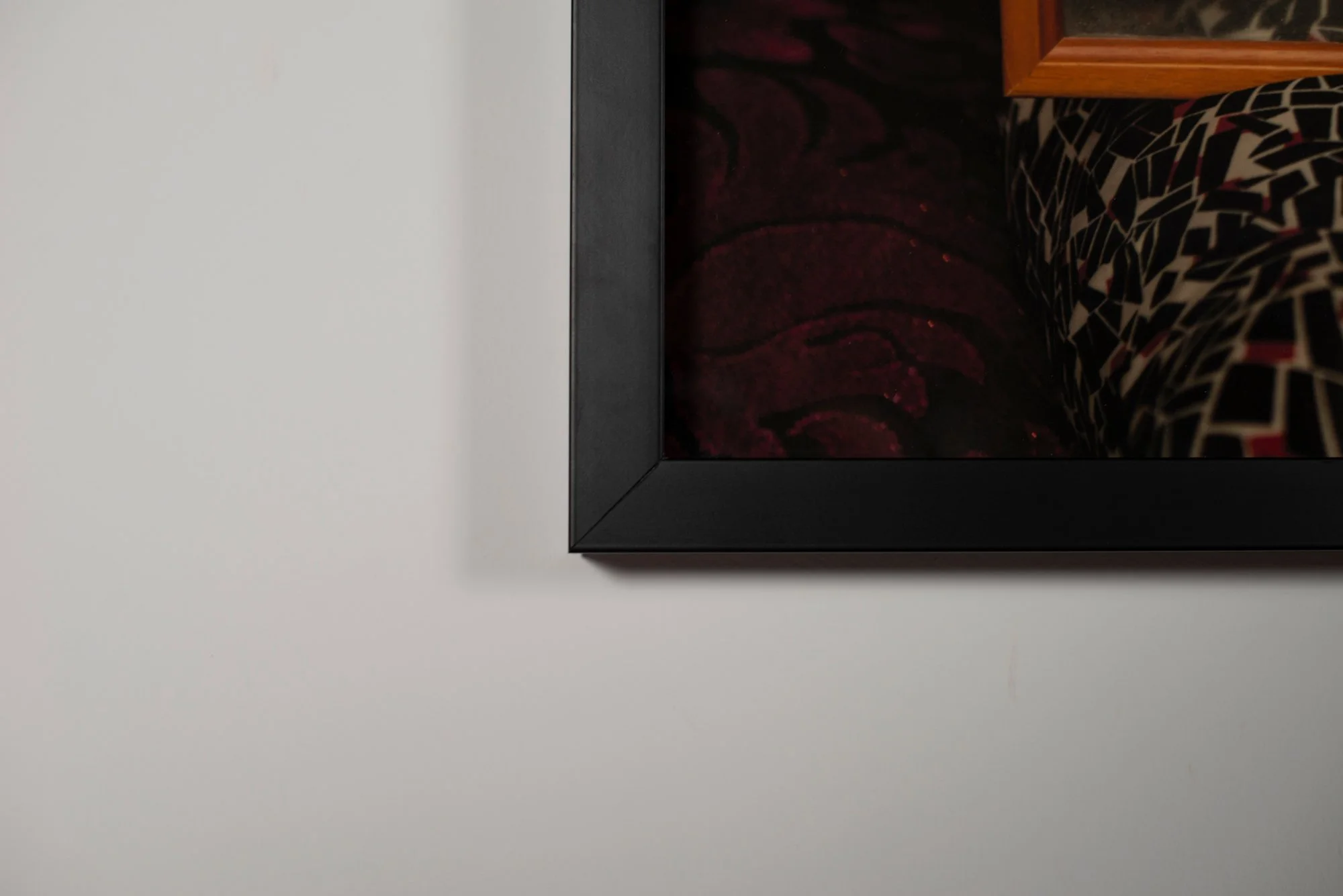 Image 2 of 4
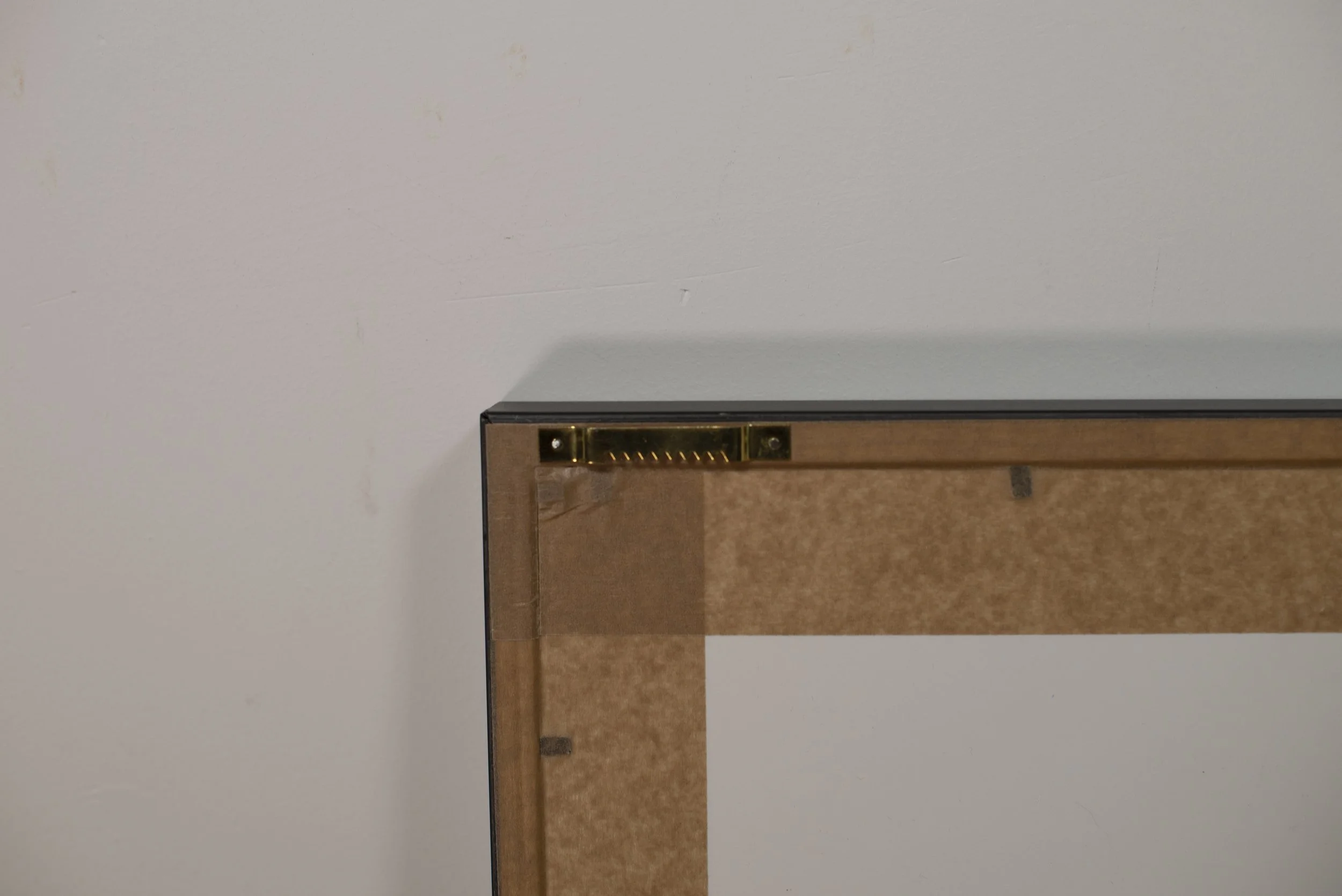 Image 3 of 4
 Image 4 of 4